Team Meets in Ottawa, Canada
14 August 2026
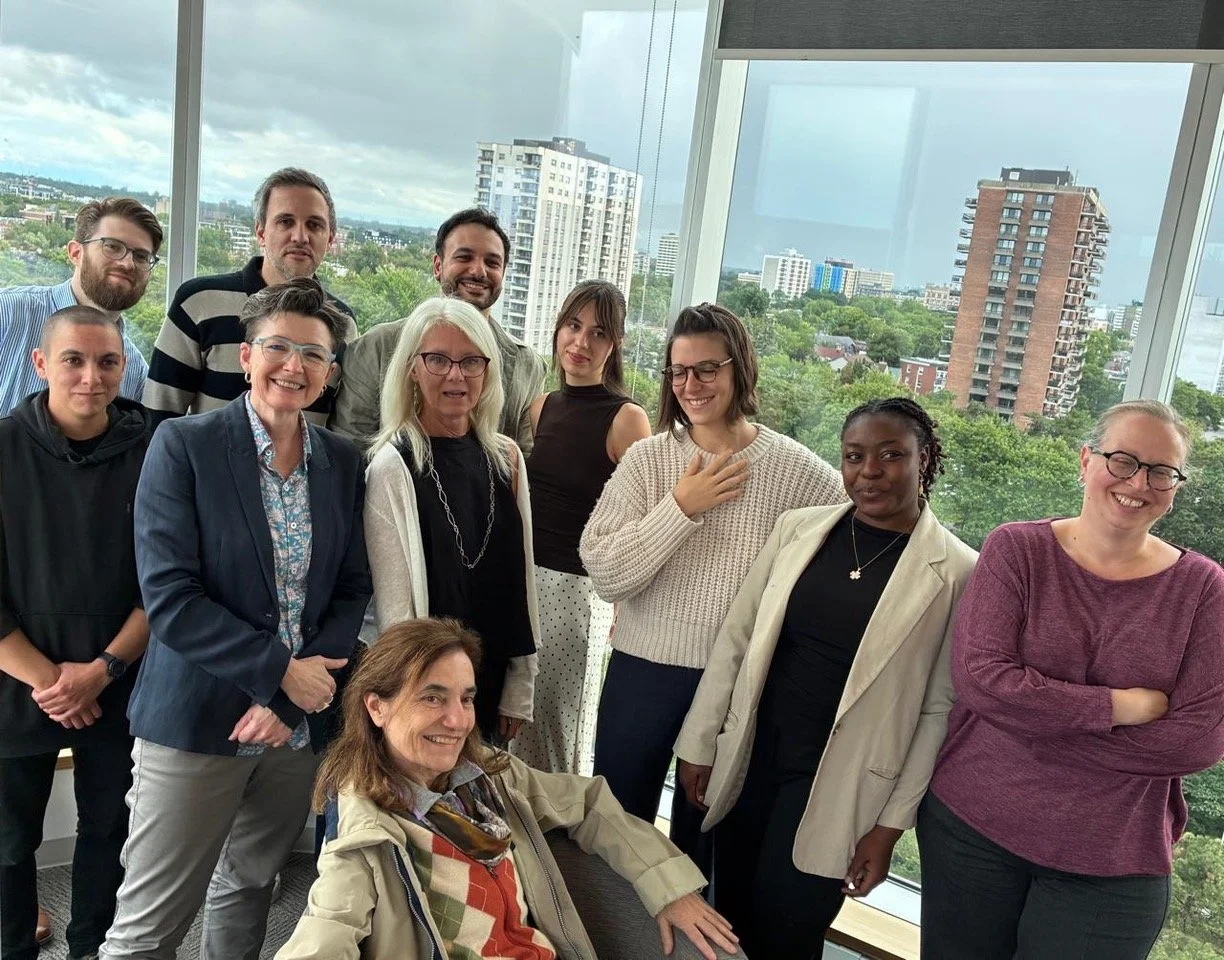
The RSSD team meets at the University of Ottawa. (From left to right: Dr Ninian Frenguelli, Swansea University; Dr Chris Miller, Dr Guilherme Borges, Universidade de São Paulo; University of Ottawa; Prof Christi van der Westhuizen, University of the Western Cape; Prof Paula Montero, Universidade de São Paulo; Prof Lori Beaman, University of Ottawa; Dr Vinicius S. M. do Valle, Universidade de São Paulo; Viktoriia Riabinina, University of Ottawa; Dr Morgane Reina, Universidade de São Paulo; Patience Olawumi Otitoju, University of Ottawa; Dr Ashley Mattheis, University of Manchester.)
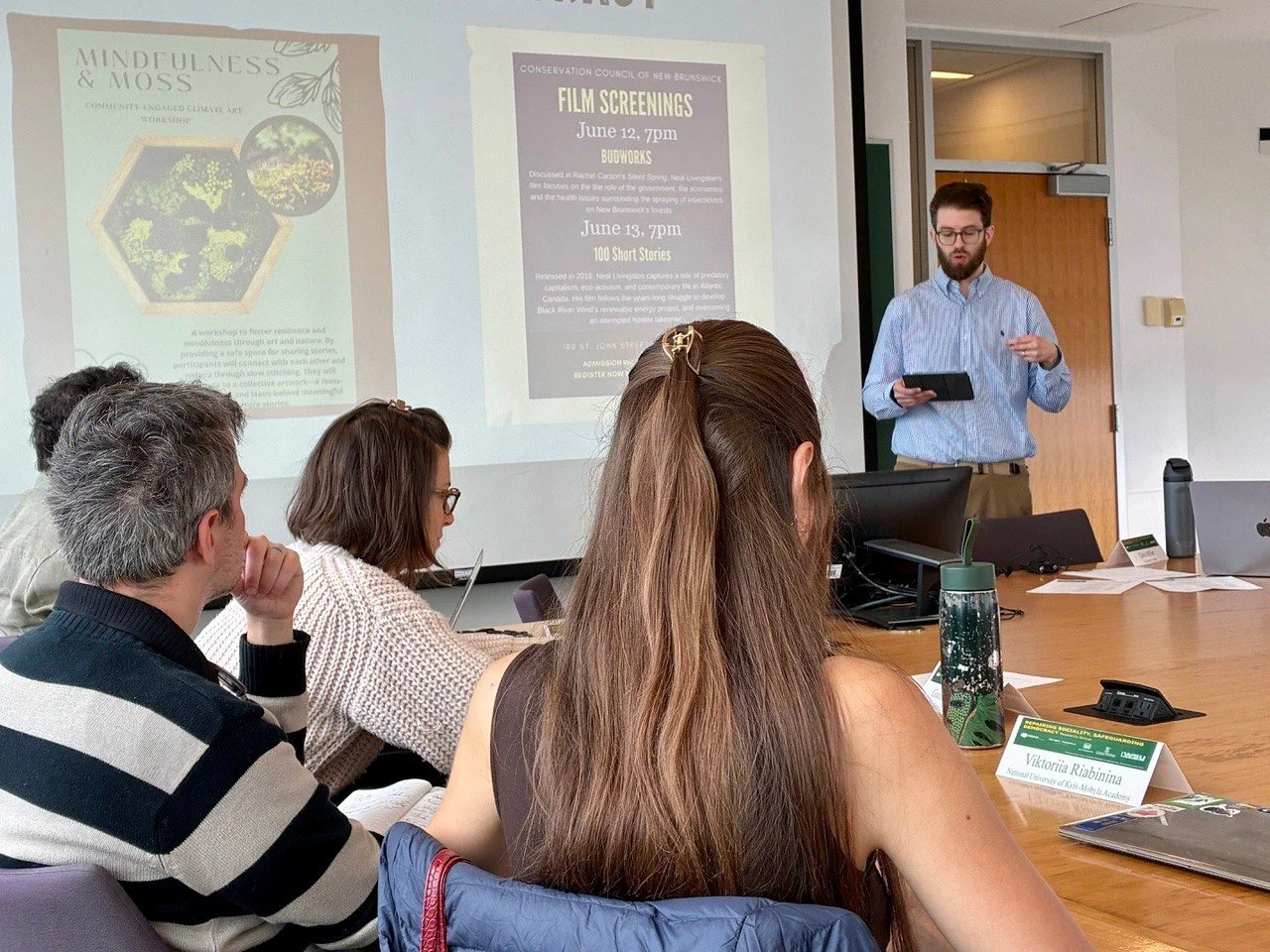
Dr Chris Miller delivers a presentation on the Haskell Library case study.
The Social Repair team met at the University of Ottawa at the end of July to discuss project updates and outputs. This meeting was an opportunity to synthesize ideas emerging out of the research our respective national teams have been completing.
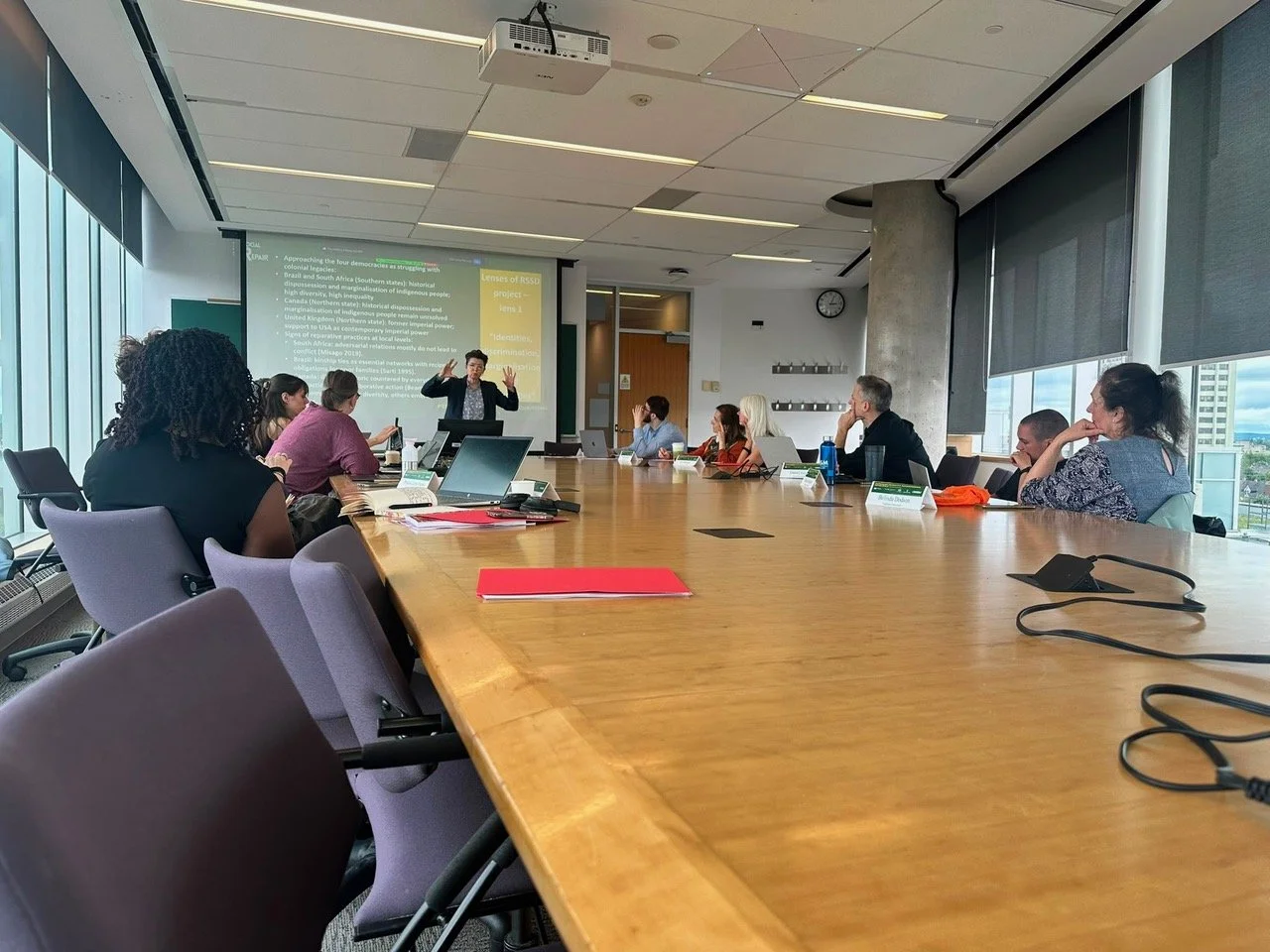
Prof Christi van der Westhuizen introduces the Social Repair project to colleagues working on other projects.
We first dedicated time to hearing updates on the case studies that team members have conducted. The South Africa team has conducted fieldwork with the organization Love uMngeni, which works to empower and transform the local community. Across its various initiatives, the organization prioritizes the dignity of the individual who interacts with the agency. This shared recognition of humanity is a key distillation of the philosophy of ubuntu.
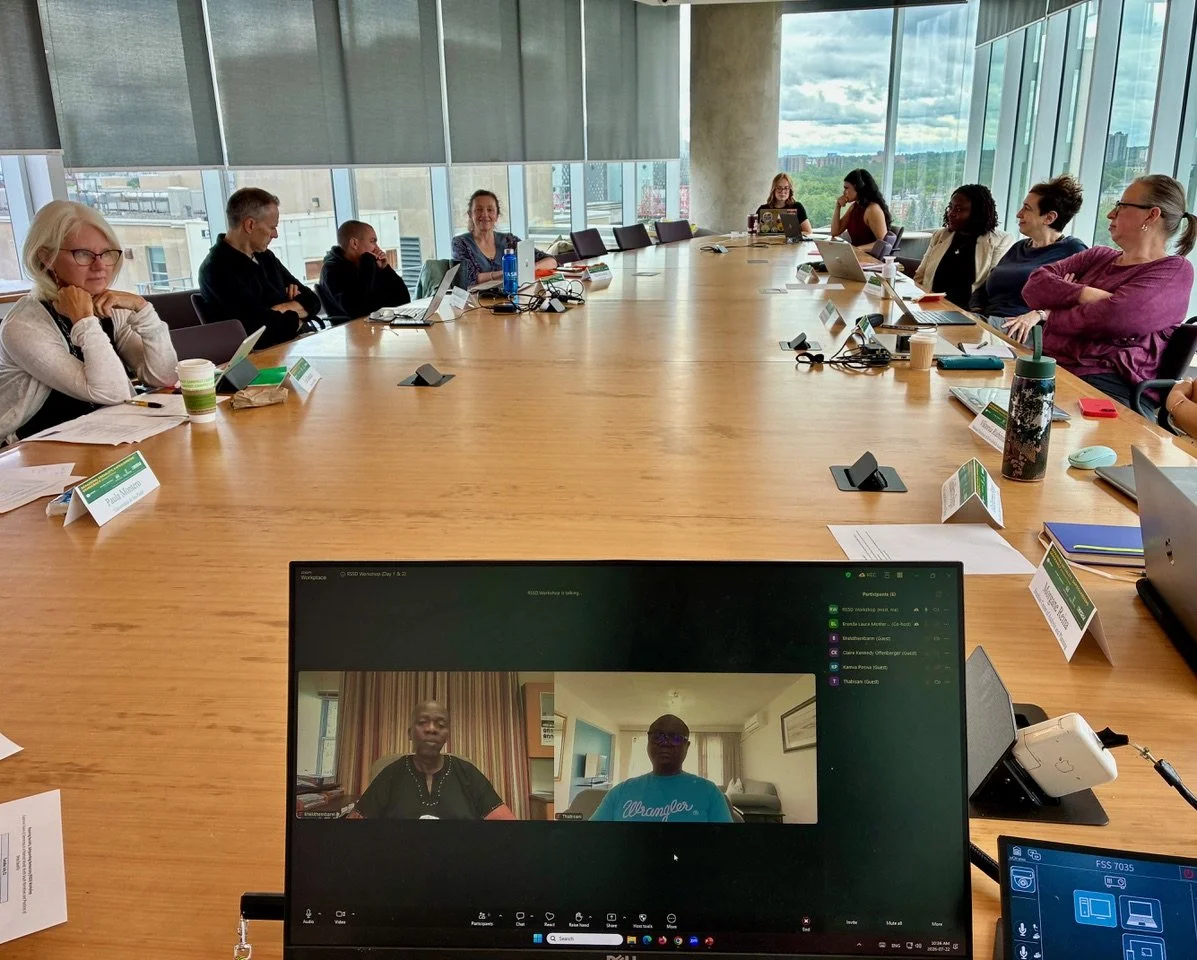
Members of the South Africa team (Prof Bhekithemba Mngomezulu and Prof Thabisani Ndlovu) joined the workshop virtually to speak about their ongoing case study.
The Canada team presented updates on two case studies. The first focuses on opposition to fracking in the province of New Brunswick during the early 2010s. This movement provided many moments of deep equality, as people from across diverse backgrounds came together to accomplish their shared goal. The second case study centres on a library that sits on the US-Canada border in Quebec and Vermont. Members of the surrounding community reveal how interactions in everyday life can repair social ruptures.
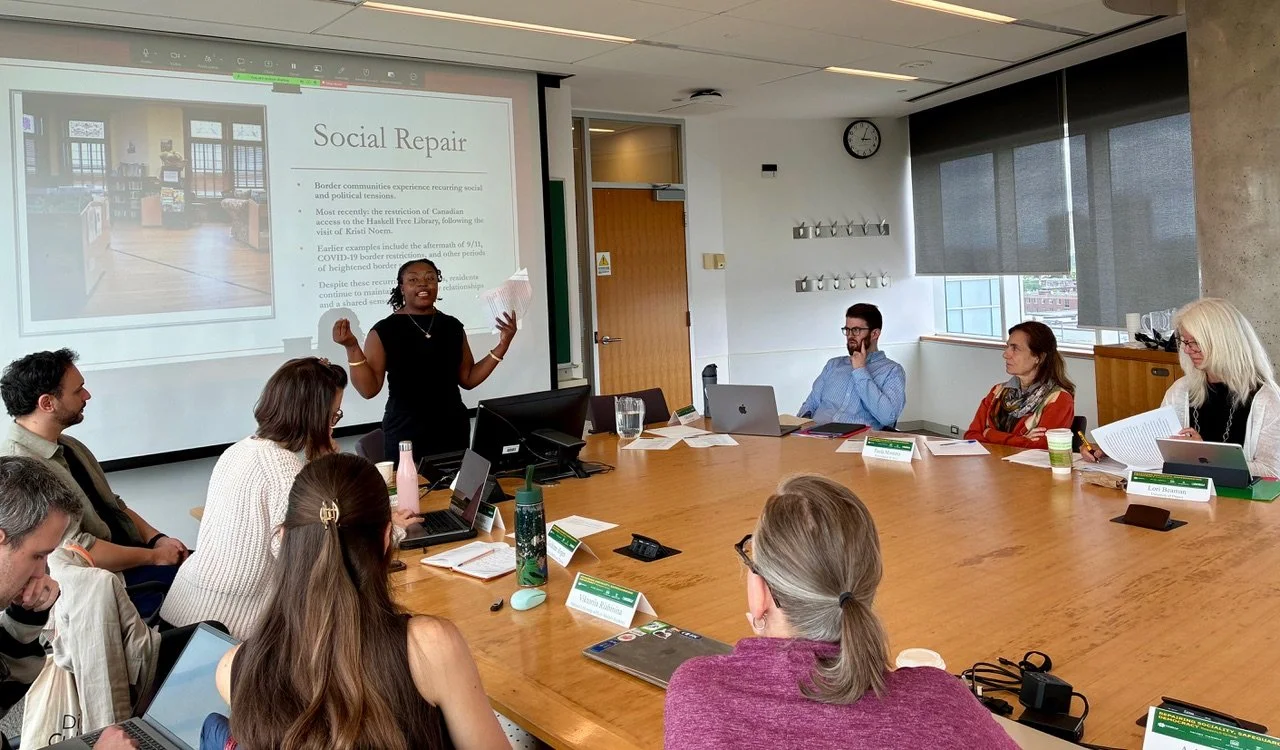
Patience Otitoju explains how the communities of Stanstead and Derby Line demonstrate social repair.
The Brazil team shared early findings from two of their ongoing case studies. The first examines the circulation of ubuntu in Brazil, highlighting the concept’s transforming role as a way for people to affirm an African identity. The second uses focus groups and interviews to probe the issue of conflict in religiously plural societies. This case reveals how people often acknowledge difference, but rarely want to engage with differences.
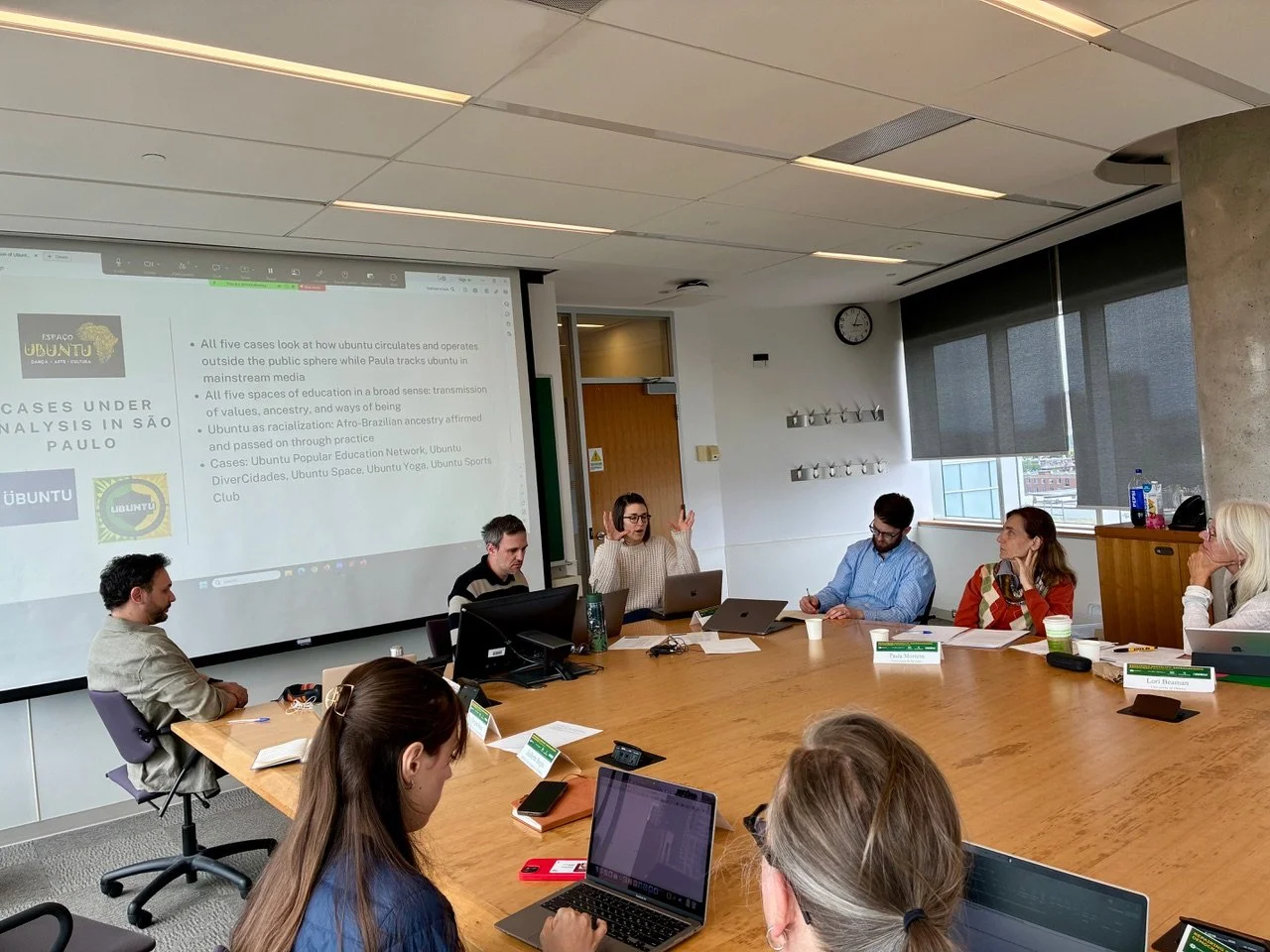
Members of the Brazil team discuss the concept of ubuntu as it appears in Brazil. (From left to right: Dr Vinicius SM do Valle; Dr Guilherme Borges; Dr Morgane Reina.)
The UK team presented updates on the three case studies they have conducted. The first uses digital methods to analyze how progressive organizations build solidarity with other groups and frame their messaging. The second applies principles of community embedded action through a public street art initiative that combats hateful imagery and messages in Swansea. Their third case study, under development, examines social media from political parties around the Welsh Senedd election to understand how community imaginaries are expressed.
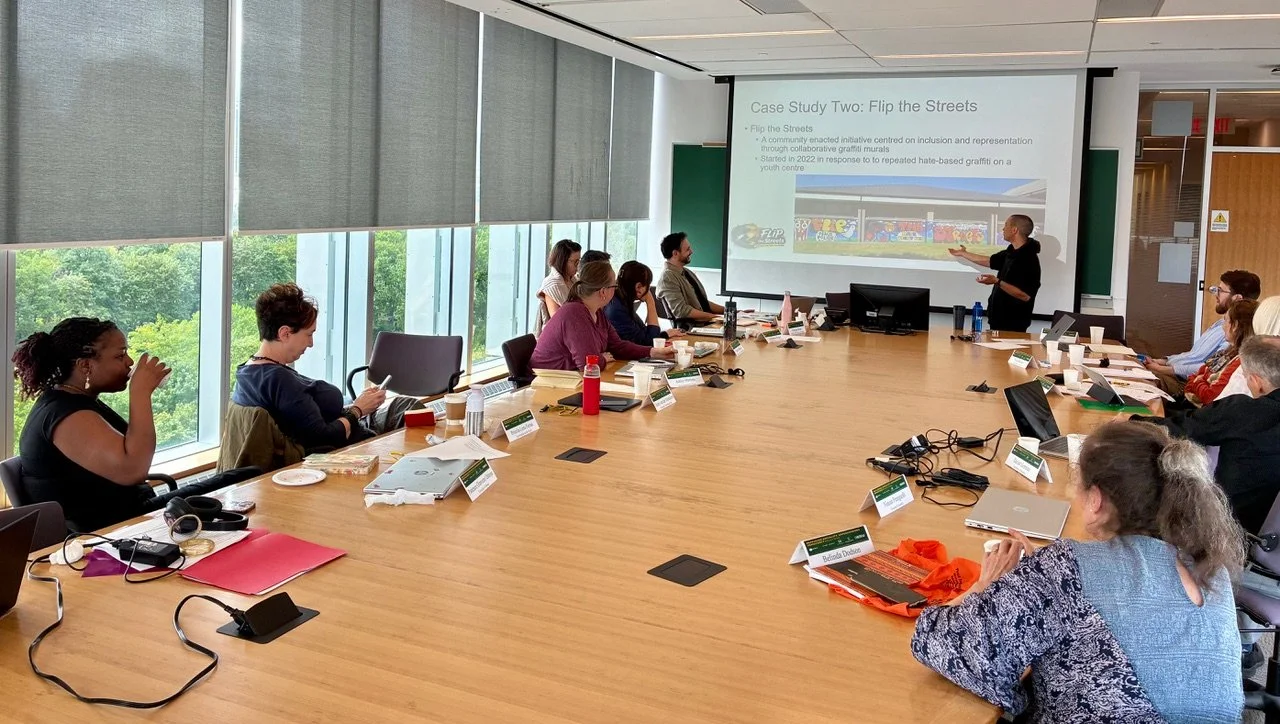
Dr Ninian Frenguelli introduces the ‘Flip the Streets’ case study in Swansea.
We were also joined by colleagues who are working through the shared issues of democracy, governance, and trust in their respective projects. Our guests included Priscila Lena Farias from the University of São Paulo. A graphic designer, researcher, and scholar in design, Dr. Farias is also co-Principal Investigator of the projectGraphic Design Histories for Creative Dissent: Archiving and Ethical Challenges. We also welcomed Daniel Gorman from the University of Waterloo. A historian who specializes in global governance, Dr. Gorman is Co-Principal Investigator of the projectGlobal Governance, Trust and Democratic Engagement in Past and Present. Conversations with members of other TAP-funded projects offered a valuable opportunity for knowledge exchange. We reflected on how researchers can approach issues like attempting to define democracy or understanding how communities attempt to build trust.
We also welcomed two local Ottawa guests. Samuel Ojo Oloruntoba is a professor of African Studies at Carleton University and is a founder of theAfrican Indigenous Knowledge Research Network. Belinda Dodson is a human geographer who researches the intersections of gender, migration, and development, and is Editor of theCanadian Journal of African Studies. As our team continues to build links between knowledge frameworks from the Global South and Global North, our conversations were enriched by the perspectives of researchers in Canada who primarily conduct work on the African context.
As our teams return to their respective homes, and resume work on their case studies, we are excited by the linkages that are emerging across our projects, as we develop a deeper understanding of the way in which everyday actions play a key role in both upholding and (where needed) repairing democracy.